





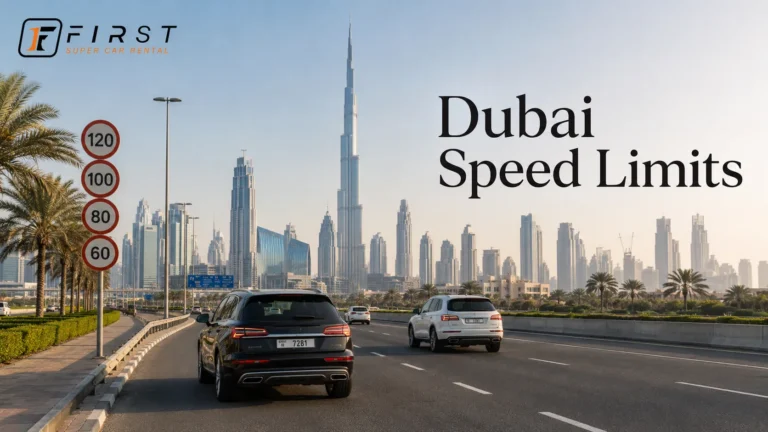
Speed limits in Dubai range from 25–40 km/h in residential areas to 100–140 km/h on major highways. Sheikh Zayed Road is 100–120 km/h, while Emirates Road and Sheikh Mohammed bin Zayed Road reach 140 km/h. Dubai applies an unofficial 20 km/h camera buffer, so radars usually trigger at 21 km/h over the limit — but this isn’t guaranteed everywhere.
Dubai speed limits by road type
| Road type | Speed limit | Examples |
|---|---|---|
| Residential / community roads | 25–40 km/h | Neighbourhood streets, parking zones |
| Urban / internal roads | 60–80 km/h | City streets, single and dual carriageways |
| Main city highways | 100–120 km/h | Sheikh Zayed Road (E11) |
| Major federal highways | up to 140 km/h | Emirates Road (E611), Sheikh Mohammed bin Zayed Road (E311) |
| School zones | Reduced (often 25–40 km/h) | Buffer is often removed here |
Limits are set by road type, lane count, and traffic density, and are always shown on posted and overhead signs.
The 20 km/h camera buffer explained
Dubai applies an unofficial buffer of about 20 km/h over the posted limit before fixed radars trigger. On a 100 km/h road, a camera usually flashes at 121 km/h, and on a 120 km/h road at around 141 km/h.
Three things make this risky to rely on:
- It is not official and can be removed at any time.
- It is not applied everywhere — some cameras, especially in school zones and construction areas, flash at just 10–15 km/h over.
- Abu Dhabi has zero tolerance — if you drive a Dubai rental to Abu Dhabi, the buffer does not apply and you can be fined the moment you cross the limit.
The safe rule: drive at the posted limit and treat the buffer as if it doesn’t exist.
Variable speed limits (the most common reason tourists get fined)
Dubai uses electronic overhead signs that change the limit in real time. On Sheikh Zayed Road the limit can drop from 120 km/h to 80 or 60 km/h during fog, rain, or heavy traffic. The displayed number is the enforceable limit at that moment, so always follow the sign, not your memory of the road.
Speeding fines and black points
Penalties rise sharply with how far over the limit you go. Exceeding the limit by more than 40 km/h carries a fine of around AED 1,000, 6 black points, and up to 30 days of vehicle confiscation, with heavier penalties for extreme speeding. Cameras are AI-based and issue fines automatically, linked to the car’s plate.
For how to check and pay these, see our guide on checking traffic fines in Dubai
Driving a rental car in Dubai? Read this first
Speeding fines on a rental are registered to the car’s plate, so they reach the rental company and are then billed to you, sometimes with an admin fee. Two tips:
- Stick to posted limits — Dubai’s cameras are everywhere and automatic.
- Watch the variable signs on Sheikh Zayed Road and the highways.
If you’re renting a high-performance car, knowing the limits matters even more. Browse our luxury car rental in Dubai fleet, including no-deposit options, and drive Dubai’s world-class roads the right way.
FAQ
What is the speed limit on Sheikh Zayed Road?
Sheikh Zayed Road (E11) has a speed limit of 100 to 120 km/h depending on the section, shown on overhead signs. During fog, rain, or heavy traffic, the electronic signs can lower it to 80 or 60 km/h, and that displayed limit is enforceable.
What is the highest speed limit in Dubai?
The highest speed limit in Dubai is 140 km/h, found on sections of Emirates Road (E611) and Sheikh Mohammed bin Zayed Road (E311). Most main city highways, including Sheikh Zayed Road, are limited to 100–120 km/h.
Is there a speed camera buffer in Dubai?
Yes. Dubai applies an unofficial buffer of about 20 km/h, so fixed radars usually trigger at 21 km/h over the posted limit. It isn’t official or guaranteed, some cameras flash at just 10–15 km/h over, and Abu Dhabi has zero tolerance with no buffer.
What is the fine for speeding in Dubai?
Fines rise with the speed. Exceeding the limit by more than 40 km/h carries a fine of around AED 1,000, 6 black points, and up to 30 days of vehicle confiscation. Lower-level speeding has smaller fines, and cameras issue them automatically.
Does the Dubai speed buffer apply in Abu Dhabi?
No. Abu Dhabi enforces a zero-tolerance policy with no buffer, so you can be fined the moment you exceed the posted limit. If you drive a Dubai rental car to Abu Dhabi, follow the limits exactly.
What is the speed limit in residential areas in Dubai?
Residential and community roads in Dubai are typically limited to 25–40 km/h to protect pedestrians and children. School zones are similar, and the camera buffer is often removed in these areas, so drive strictly to the posted limit.
How do speeding fines work on a rental car?
Speeding fines are registered to the car’s plate, so the rental company is notified first and then bills the renter, sometimes with a small admin fee. Check your fines by plate before returning the car to avoid surprises.
Renting a car in Dubai? Free delivery and no-deposit options across our fleet. 📍 Azizi Riviera 46, Shop 26, MBR City, Dubai, UAE 📱 WhatsApp / Call: +971 50 280 8780 — Chat on WhatsApp 🌐 firstsupercarrental.com 🗺️ View on Google Maps